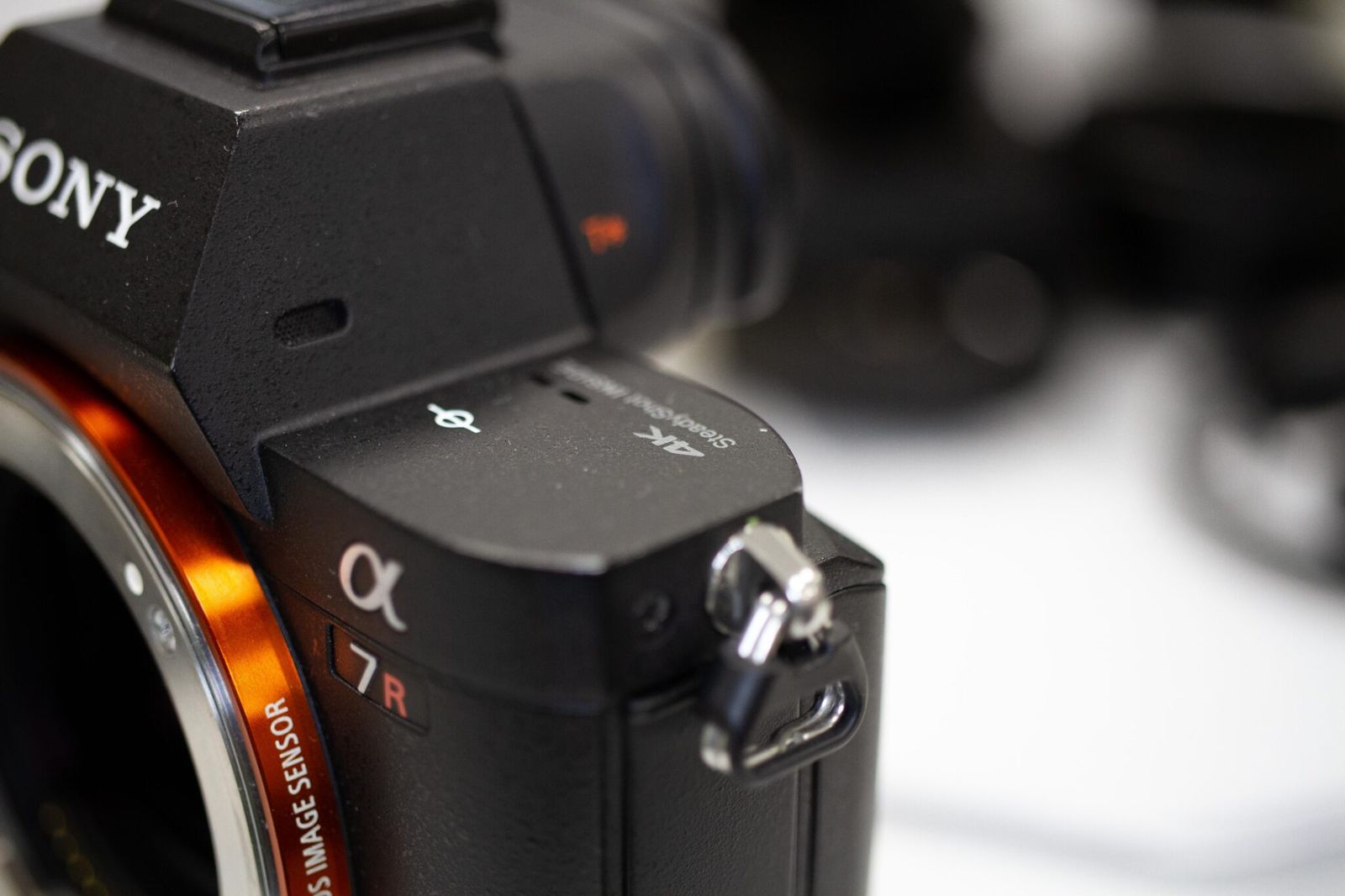
Nikon D800E: Multi-Selector Not Responding, Worn Grips
The multi-selector on this Nikon D800E had gone soft and stopped registering inputs: what fails is not the electronics but the rubber contact pad under the lever. Control restored, grip rubbers replaced, sensor and viewfinder cleaned — €200 for all of it.

Symptom checklist
- The multi-selector feels soft and no longer clicks
- You have to press twice before the input registers
- One direction works and the others do not
- The focus point drifts or jumps on its own
- Grip rubbers have hardened and are lifting at the edges
- Visible dust in the viewfinder and marks on shots at small apertures
Has the multi-selector on your Nikon D800E — the little joystick under your thumb — gone soft, lost its click, and started needing two presses to move the focus point? The camera is not dying: in the vast majority of cases the rubber contact pad underneath the lever has simply worn out. It is a cheap part, and it is restored without touching the electronics.
This is a real job from our bench: a multi-selector that would not respond, grip rubbers long past their best, and a dirty sensor and viewfinder. All of it together, €200.

How to spot a worn multi-selector
The fault does not arrive all at once: it gets worse over months, and you adapt without noticing.
- The lever feels soft, without the small sharp click it had when new.
- You have to press twice, or press harder, before the input registers.
- One direction works and the others do not — usually the one you use most goes first.
- The AF point drifts or jumps while you are composing.
- The centre button, the one that confirms, no longer clicks.
If it is the surrounding dial rather than the lever, nothing changes: the same contact membranes sit underneath.
Why it wears out: it is rubber, not electronics

Under every control on a DSLR there is no microswitch but a conductive rubber membrane: a small dome that collapses and bridges two traces on the printed circuit. It is the same principle as the buttons on a TV remote.
That dome has a finite life. Pressed often enough it loses its springiness, flattens out, and the contact becomes unreliable: first you press a little harder, then twice, then it stops working. On a professional body like the D800E, where the multi-selector is used on every single frame to place the focus point, it is the first control to go.

The comparison is unambiguous: on one side the pad taken out of this camera, on the other an intact one. The ribs that should collapse and spring back are flattened, and the central disc has lost its relief.
The good news is that the electronics are not involved. The board, the flex and the contacts are healthy: the work is on the rubber, and the control goes back to what it was.
Can you fix it yourself?
There is one thing worth trying, and it costs nothing: cleaning. If dust or pocket grime has worked its way under the lever, sometimes that is all it is. A puff of compressed air from a distance, without pushing anything into the gaps.
What does not work — and we mention it because people ask:
- Pressing harder recovers nothing. A flattened membrane does not become springy again, and persisting tends to break the plastic cross under the lever, which is one more part to buy.
- Spraying contact cleaner into the gap is the worst option: the liquid runs down onto the control board, turning a rubber problem into an electrical one.
- Opening the rear cover to get at it is not a kitchen-table job: the display and control flex cables run right there, and they are the first thing to tear.
How we repaired it

Reaching the multi-selector means opening the camera from the back and separating the rear cover, disconnecting the display and control flex cables. The module carrying all the membranes sits underneath.

With the control restored we did the rest of what the customer had asked for. The grip rubbers were well past their best: on these bodies they harden, shrink at the edges and start lifting at the thumb corner. Replaced with the full kit, the camera is pleasant to hold again — which on a body of well over a kilo is not a cosmetic detail.
Then the sensor cleaning and the viewfinder. On the viewfinder one honest note, because it is the question we always get: the dust you see when you look through sits largely on the focusing screen and the pentaprism, and some of it has settled where it cannot be reached without dismantling the optical block. It improves a great deal; it does not always reach perfect — and in any case that dust never appears in your photographs.

Camera closed, multi-selector clicking again in every direction, new grip rubbers and a clean sensor.
What it costs
| Service | Price |
|---|---|
| Rear multi-selector restoration | €200 for the lot |
| Grip rubber replacement | Included |
| Sensor cleaning | Included |
| Viewfinder cleaning | Included |
| Diagnosis and written quote | Free |
| Warranty on the repair | 6 months |
The €200 is the total for all four jobs done together, not four line items added up. That is why grouping them pays: the camera is opened once, and the labour is charged once. If all you need is a sensor clean, that on its own is €30.
Typical turnaround for this kind of work is about a month, since it depends on parts arriving, and it is confirmed in your free written quote. Return shipping is a flat €20 to most EU destinations, fully tracked. We ship within the European Union — not the UK or Switzerland, because post-Brexit customs makes the round trip slow and expensive for you.
Send us your Nikon
We work across the Nikon range, from professional DSLRs to mirrorless: see the other Nikon repairs we have done, such as this Nikon D800 with a dead autofocus or this Nikon D4S shutter replacement.
If you want to see the process end to end, it is laid out in how it works; if you have already decided, start your repair and we will come back with the quote. Free diagnosis and written quote, 6-month warranty, mail-in from almost anywhere in the EU.
Frequently asked questions
My Nikon joystick has stopped clicking — is that an electronic fault?
Almost never. Under the lever sits a conductive rubber membrane that collapses to bridge two traces, just like the buttons on a TV remote. Pressed often enough it loses its springiness and the contact becomes unreliable. The board and the flex cables stay healthy: the work is on the rubber, not the electronics.
How much does a Nikon D800E multi-selector repair cost?
On this job €200 covered four things together: restoring the multi-selector, replacing the grip rubbers, cleaning the sensor and cleaning the viewfinder. Diagnosis and the written quote are free, and the exact price for your camera is confirmed before any work starts.
Is it worth having several jobs done at once?
Very much so: the camera is opened once and the labour is charged once. Grips, sensor cleaning and controls all fit together well. If all you need is a sensor clean, that on its own is €30.
Can all the dust be removed from the viewfinder?
It improves a great deal but does not always reach perfect: some of the dust sits on the focusing screen and the pentaprism, where it cannot be reached without dismantling the optical block. One reassuring point: dust in the viewfinder never shows up in your photographs, because it sits on a different optical path from the sensor.
Can I try to fix it myself?
You can try compressed air from a distance, without pushing anything into the gaps: if it is only dirt, sometimes that is enough. What to avoid is pressing harder, which tends to break the plastic cross under the lever, and above all spraying contact cleaner into the gap: the liquid runs onto the control board and turns a rubber problem into an electrical one.
How long does it take, and how do I send the camera?
This kind of work takes about a month, since the timing depends on parts arriving, and it is confirmed in your free written quote. You ship the camera from anywhere in the EU — we do not currently handle the UK or Switzerland — and return shipping is a flat €20, fully tracked.
Is this your fault? Ask about this repair
Tell us what is happening and we will reply with a first assessment and explain the next step. The binding quote is issued after inspection. Diagnosis is free and you are not committing to anything — no shipping details needed yet.
More Nikon repairs
Nikon 18-105mm VR: Broken Lens Mount Replacement
The 18-105mm VR has a plastic bayonet — one knock and it chips or cracks, and the lens no longer sits safely on the camera. We replace the mount for a fixed €80, in about a week in the lab.
€80 fixed price
 ERR
ERR Nikon D80 ERR: Mirror Locked Up — Mirrorbox Gear Repair
ERR on the top display and a mirror that locks mid-cycle. On the D80 the cause is almost always a worn drive gear in the mirrorbox — we replace it, recalibrate the camera and return it working, for a fixed €120.
€120 fixed price
Nikon D4S Shutter Replacement & AF Accuracy Check
A high-mileage Nikon D4S with suspected AF inaccuracy. We replaced the worn shutter unit and verified the autofocus system — which turned out to need no intervention at all.
€350 fixed price